Motorhome Weight Plate Explained: GVW, MAM and Payload in Plain English
If you have just bought your first motorhome, the small metal plate riveted inside the cab can feel like a secret code. It is covered in numbers with no explanation, and yet those numbers decide what you can legally carry, what you can tow, and how you plan a route with confidence.
This is a plain-English guide to the motorhome weight plate: what it shows, where to find it, and how to read it without reaching for a spreadsheet.
What the weight plate is and where to find it
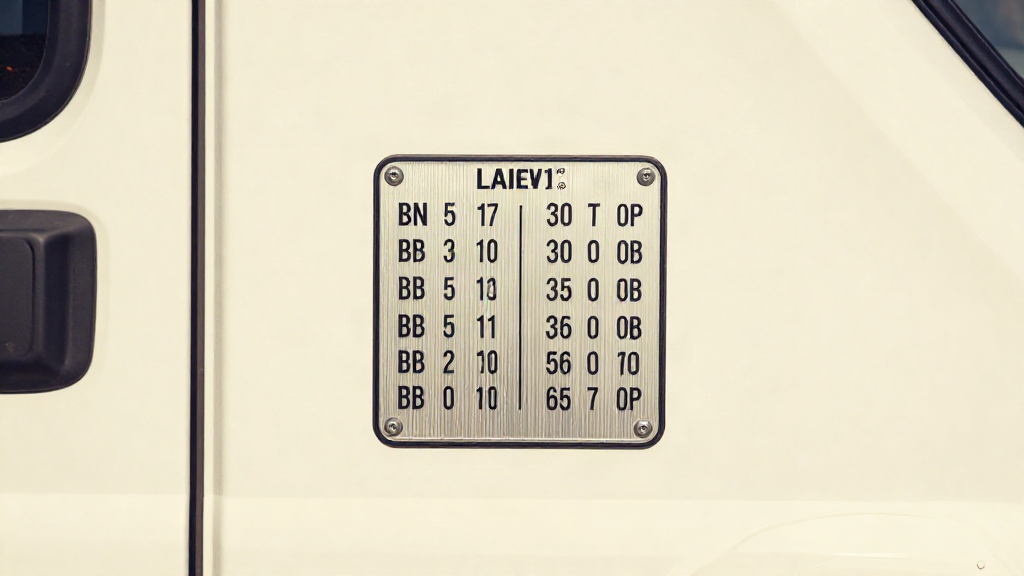
Your motorhome has a manufacturer's plate - sometimes called the VIN plate or weight plate - that lists the maximum weights the vehicle is designed and approved to work at. It is a legal record, not a suggestion.
You will usually find it in one of these places:
- Inside the cab, often on the door pillar or the door shut
- In the engine bay, near a front suspension turret
- On the chassis or bulkhead under the bonnet
Some motorhomes also carry a second-stage plate added by the converter who fitted the habitation area. When two plates exist, the lower of the two limits is the one that applies to you. That detail catches out a lot of new owners.
The numbers on the plate, decoded
Manufacturers vary slightly, but most motorhome weight plates show a handful of figures.
GVW / MAM (Gross Vehicle Weight or Maximum Authorised Mass). This is the maximum your motorhome can weigh when fully loaded - everything on board, including you, your passengers, water, gas, food and gear. It is the single most important number on the plate.
Axle limits (front and rear). These are the maximum weights each axle can carry. The front and rear limits often add up to more than the GVW, so you cannot simply load to each axle's maximum - the total still has to stay under the GVW.
GTW / MTPLM (Gross Train Weight or Maximum Technically Permissible Laden Mass). If your motorhome can tow a car, trailer or motorcycle, this is the maximum combined weight of the motorhome plus whatever it is pulling.
MIRO (Mass in Running Order). The weight of the vehicle as it left the factory, with a nominal allowance for a driver, fuel and basic fluids. It is your starting point for working out what you can add - but it is often optimistic, so treat it with care.
Payload. The difference between the GVW and the MIRO. In other words, the weight you have left for people, water, gas, clothes, bikes and everything else.
A worked example
Say your motorhome has a GVW of 3,500kg, a front axle limit of 1,850kg, a rear axle limit of 2,000kg and a MIRO of 3,050kg.
Your payload is 3,500 - 3,050 = 450kg. That is the entire budget for everything you load.
Now picture a typical trip. Two adults at 75kg each is 150kg. Add 100kg of water and 30kg of gas, and you have already used 280kg - before a single bag, awning, bike rack or bottle of wine. Suddenly 450kg does not sound like much, and this is exactly why so many motorhomers discover they are overloaded only when they weigh the vehicle.
A quick loaded weighbridge check is the honest way to know where you stand. It is a small cost for real peace of mind.
Why the weight plate matters for more than the weighbridge
Those numbers ripple out into the rest of your touring life.
- Your licence. Many UK motorhome owners can drive up to 3,500kg on a standard car licence. Vehicles above that - up to 7,500kg - generally need category C1 entitlement. Knowing your GVW tells you instantly which side of that line you are on.
- Safety and handling. An overloaded motorhome brakes longer, sways more in crosswinds and puts extra strain on tyres. Staying within limits is a handling decision as much as a legal one.
- Route planning. Weight is one dimension of your vehicle's profile. Height, width and length decide which roads, bridges and site entrances you can safely use - and weight often sits alongside them on weight-restricted roads and bridges.
- Insurance and legality. Driving outside your plated limits can affect your cover and put you on the wrong side of the law.
Where your dimensions and limits meet your navigation
Here is the practical upshot: your plated weight, height, width and length are not trivia - they are the inputs that decide whether a route actually suits your outfit.
That is exactly what a purpose-built motorhome and caravan sat nav is for. Instead of hoping a standard navigation app will keep you off unsuitable roads, you enter your vehicle's dimensions once and plan routes that respect them. You can find your next stop among 6,000+ UK campsites, navigate with live traffic, and run it all through Apple CarPlay on the dashboard screen you already use.
The idea is simple: the paperwork tells you what your vehicle is, and your navigation app makes sure the road ahead agrees with it.
Your next steps
Find your weight plate this week and write the key figures down somewhere you will not lose them: GVW, axle limits and payload. Book a weighbridge visit with a realistic load on board, then adjust what you carry until you are comfortably under your limits.
Once you know your numbers, put them to work. Enter your vehicle's dimensions into your sat nav, and let the route planning take care of the roads, bridges and campsites that suit a motorhome rather than a hatchback. Touring should feel like freedom - and knowing your weights is where that freedom starts.
Try it free for 7 days, then continue for £3.99 a month on iPhone and iPad.