Your vehicle decides your route. Not the sat nav, not the postcode, not how confident you feel behind the wheel. When you compare a motorhome with a campervan and a caravan, the thing that changes most is the road you can actually drive - which low bridge you duck under, which lane you squeeze down and which weight limit you can pass.
That is why the motorhome vs campervan vs caravan question is not just a spec-sheet argument. It is a practical, everyday thing. The three types differ in height, width and weight, and each of those numbers quietly rules roads in or out before you have even left the drive.
This guide walks through how the three outfits differ, where each one runs into trouble, and how to set up a vehicle profile so every route fits the van you drive.
Why your vehicle type matters more than your destination
Most navigation apps assume you are driving a car. A car is short, narrow and light, so almost every road, bridge and lane on the map is fair game. The moment you add height, width and weight, some of those roads quietly stop being options. A route that is fine in a hatchback can be a dead end, a scrape or a fine in a motorhome.
Put simply, the bigger and heavier your outfit, the more the map shrinks. That is not bad news - it just means the route needs to be planned around your vehicle rather than the other way round.
Height: the low bridge that ends your day
Height catches people out more than anything else, because you cannot see a low bridge from the driver's seat until it is close. Motorhomes are the tallest of the three, especially with a roof vent, aerial or solar panel up top, and that kit can push your real height above the figure in the handbook. Campervans sit lower, often based on a panel van with a pop-top or a modest roof, so many slip under bridges that stop a motorhome. A caravan is low on its own, but you still measure to the top of the caravan plus anything on its roof - and the caravan is the part that has to clear the bridge, not the car towing it.
Width: narrow lanes, farm tracks and tight entrances
Width matters as much as height on the country lanes that make UK touring such a joy. A motorhome runs wide, often around 2.2 to 2.4 metres before you count the mirrors, which turns single-track lanes, passing places and narrow village streets into a real squeeze. Campervans are closer to a large car in width, so they thread through gaps a motorhome cannot. A caravan adds width behind you, and it does not steer round tight corners the way your car does, so farm tracks and campsite entrances deserve a second look before you commit.
Weight: limits and what your outfit really weighs
Weight decides which weight limits you can pass and which you cannot. Motorhomes are the heaviest of the three, and a fully loaded one with water, fuel, people and kit climbs quickly. Campervans sit lighter in the middle. A caravan passes its weight onto the towing vehicle, so it is the combined weight that counts against a limit, not just the car on its own. Plated limits, weak bridges and some residential restrictions are all about this figure.
How the three types compare at a glance
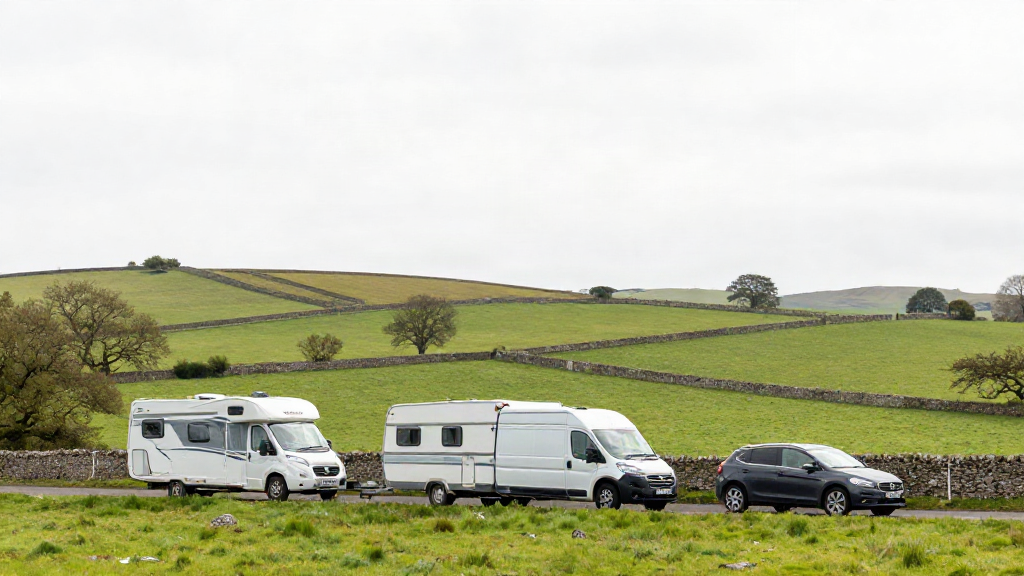
Think of it as a sliding scale. A motorhome is the tallest, widest and heaviest, so the most roads are ruled out - but it is the most self-contained and comfortable once you arrive. A campervan is lower, narrower and lighter, so it goes where a big motorhome cannot, with less living space in return. A car and caravan is low on its own but wide and heavy behind you, so tight lanes and combined weight limits need care, while the car stays easy to drive solo.
Where each type runs into trouble
Motorhomes meet low bridges, height barriers, narrow lanes and weight-restricted bridges most often, and town centre restrictions can catch a tall or heavy van too. Campervans face far fewer height restrictions, but you still want to watch width in old villages and height if you run a pop-top or a roof rack. Caravans struggle with tight corners and reversing, and the combined outfit has to be measured against weight limits before you set off.
Setting up your vehicle profile so every route fits
This is where a purpose-built app earns its place. Instead of guessing, you enter your vehicle's height, width and weight once, and routes are planned around the outfit you actually drive. A motorhome profile keeps you off the low bridges and narrow lanes that suit a campervan. A caravan profile accounts for the outfit behind you, not just the car in front. You set it up once per vehicle, save it, and every trip after that starts from the right numbers - no re-reading the handbook at the side of the road.
The rest of the app is built for the same job: 6,000+ UK campsites to plan your next stop, live traffic to keep the drive steady, and Apple CarPlay so the directions sit where you can see them. It is free for 7 days, then GBP 3.99 a month on iPhone and iPad.
Checks to make before you set off
Measure your real height, including roof kit, rather than trusting the handbook. Note your width with the mirrors out. Know your weight when loaded, not when empty. Save one profile for each vehicle you tour in, so the right numbers load every time.
The right route is the one that fits you
Your vehicle type is not a limitation - it is simply a set of numbers that decides which roads are worth driving. Get the profile right and the app can steer you around trouble before you meet it, so the day is about where you park up, not where you got stuck.
Motorhome, campervan or caravan: same countryside, three very different routes. Enter your dimensions once, and let the navigation do the sorting.